

Why Your Firm Needs Professional Services Automation
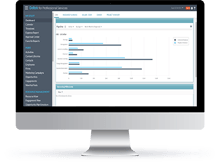 First off, you’re thinking what does this perplexing term, professional services automation (PSA), actually mean? Well, before we jump into the need for it, let’s first look at what determines a professional services firm. At its core, a professional services firm sells knowledge and time as opposed to an actual tangible product.
As a result, tracking revenue to product sold isn’t as simple as selling a “widget” for a predetermined amount to ensure a profit. Instead, time must be tracked to a project to ensure the professional services firm is able to make a profit from the services they provide. Therefore, the purpose of a PSA is to help streamline the delivery of those professional services.
Enterprise Resource Planning Versus Professional Services Automation
All bourbons are whiskey, but not all whiskeys are bourbon. That’s right, and not all enterprise resource planning (ERP) tools are PSA tools. This is because many ERP systems aren’t designed to meet the specific requirements of professional services firms. Instead, many firms try to piece together their own systems using a variety of generic tools such as an off the shelf accounting product and a homegrown project management solution, or in other cases, using a generic ERP and trying to customize it to meet their needs.
PSA systems, on the other hand, are designed to meet the unique requirements of the professional services industry. These systems come complete with all of the tools a firm needs to manage its business. More importantly, all of these systems communicate with each other. Thus, firm leaders have a 360-degree view into their business.
Benefits of Professional Services Automation
Firstly, PSA systems support new business development by integrating the client relationship management tool with the entire system that maintains your business. This integration makes it easier to take a lead to opportunity and finally create a project.
Secondly, resource planning and strategy development are based on past project performance data. The data ensures that your bid for a project is representative of how your firm delivers its services. Consequently, your firm can rest assured that, at the end of the project, the projected profit will be close to the actual profit.
Lastly, PSAs bring all of your business components together in one system. This reduces operational complexity and shortens the amount of time spent on many of your critical business processes. Not only is the time savings a benefit, but smooth operations for back office personnel are ensured which supports improving the client experience and satisfaction.
Moving Your Firm to a Professional Services Automation Software
Implementing a PSA solution can increase your firm’s productivity and ability to deliver projects on-time which guarantees accurate project planning. However, don’t go at it alone. Make sure you pick a solution that meets the majority of your firm’s needs and choose a trusted partner to assist with the implementation. Trying to force the wrong system to work for your firm will only lead to wasted money and poor usage practices from employees.

 There is no shortage of ways for professional services firms to solicit and capture client feedback. Some firms structure their initiative as a once-a-year check-in with repeat clients while others hire outside consultants to conduct third-party client satisfaction interviews. In a previous posting, we reviewed
 A KPI, or Key Performance Indicator, is a measurable value that demonstrates how effectively a company is achieving crucial business objectives. Organizations should use KPIs to evaluate their success at reaching targeted goals. Simply stated, KPIs provide your firm with metrics that compare budgeted amounts to the actual values. KPIs are no longer just for accounting and finance as they now reach deeper into a firm’s operational side examining marketing, business development and project management.
 It wasn’t long ago that firm management took a “need-to-know” approach with sharing project performance information with staff. Today, most firms have changed their attitude about access to project information. Firm managers want project managers to be engaged with the financial results of their projects and have taken great steps to train them to use the Deltek Vision reporting tools and dashboards. Still, project managers are intimidated and paralyzed by the information they receive.
 Full Sail Partners, a Deltek Premier Partner, is proud to announce that
  Over the past couple of decades, advances in technology have significantly changed the way businesses are run. As a positive result, employees have increased their productivity as they are able to do more with their available time. On the other hand, with the various ways of receiving data now, an enormous amount has been and is currently being collected which has exponentially increased the time required to manage it. Putting an effective document management system in place has become crucial to ensure successful business operations. Employees must understand how and where to store important files and project information to keep business running smoothly.
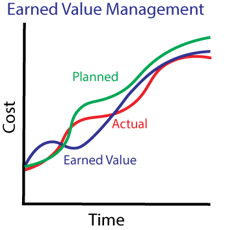 For project-based firms, measuring current firm performance is the most significant indicator of future firm performance. Furthermore, by using trend data, firms can forecast cost and schedule variances in the early stage of a project. A preferred method by project managers to factor this trend data is the earned value management technique.
 Document management in the AEC Industry is more critical than most. Union Square can help your firm integrate all relevant data, allowing you to spend less time organizing and more time executing projects. Union Square enables your firm to store and access critical firm-wide and project information, including documents, financial information, drawings, images, and emails in one central repository. As a result, your firm has the ability to:
 Full Sail Partners and Planifi announced their recently formed strategic partnership. This alliance brings together Full Sail Partners’ world-class consulting services with Planifi’s industry-leading resource planning software “Project Analyzer” to provide architecture and engineering firms with a better way to manage their resources.
 As a fan of zombie movies, you can probably guess that The Walking Dead is one of my favorite shows. If you’ve never watched it before, it’s a series that follows a group of survivors as they learn to adapt in a world overrun by zombies. Now, I’m going to let you in on a secret – don’t become attached to any of the main characters, because they are more than likely going to die. It’s the unfortunate reality for any zombie themed flick. Although your firm isn’t facing a zombie apocalypse, they do face several threats that can affect profit margins on fixed fee projects. Let’s find out if any of these classic zombie types are lurking in your fixed fee projects.